
Jennifer Robinson, LJI
The good news for his 30 hives this year is that few varroa mites have been found in the hives. Varroa mites are the parasites the size of a pinhead that can kill entire colonies of bees, which is what happened last year to more than half Mohamed’s hives, as well as those of other beekeepers across Quebec. The bad news this year is that honey production levels are much lower than usual, likely because of the wet conditions this summer. Many beekeepers report similar findings this year.
“The hives are strong, which is great. It means there is a better chance they will sur- vive the winter,” says Mohamed.
This is the crucial time of year when the honey supers are removed, the bees are treated against varroa mites and the hives checked and wrapped up warmly with enough honey or food to keep them fed until spring.
Beekeeping has grown significantly in the area in the past 10 years. In addition to people who have a hive or two in the garden, a number of small businesses and community projects have been launched.
WB Gold honey started out as a hobby eight years ago for Mohamed and his wife. Today, WB Gold honey is one of only a few Quebec honey brands that is certified ‘organic’. When it comes to organic honey, West Bolton is an ideal location. There is little pesticide or herbicide use in the area and WB Farm meets Quebec’s requirement of being located more than three kilometres from golf clubs or properties where restricted products are used.
Jonathan Sirois, head of Apiculture Sirois on Mill Road in Fulford produces Jo Gros Dard honey and is also specialized in breeding queen bees suited to Quebec’s tough climate. Some of the honey from his 30 hives is sold to restaurants in the area.
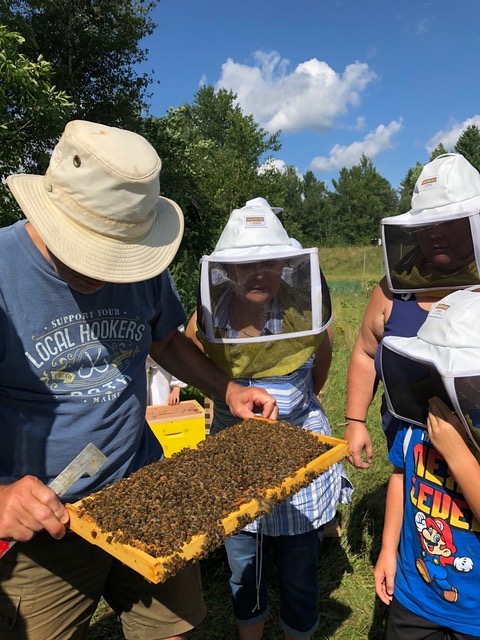
Alain Déry, president of the non-profit Rucher Boltonnois in East Bolton and creator of the popular J’adopte une Ruche (Adopt a Hive) program, has 44 hives in six locations from Eastman to Austin. Déry fell in love with bees and their ability to work collectively after read- ing the Secret Life of Bees, a best seller about relationships among women in the US South. It costs $470 to adopt a hive the first year, and $300 each subsequent year. Adoptive families receive training and are coached by volunteer experts. Families get to keep half the honey extracted from their hive.
Beekeeping is a tough business. As if economic and parasite challenges weren’t enough, beekeepers also have to protect their hives from predators like bears, mice, skunks, and the effects of the weather, cold and humidity.
But it continues to grow in this area as more and more people appreciate how bees work together and the vital role they play in pollinating plants. We are fortunate to have sufficient wild flowers, shrubs and trees to feed current levels of bees and insects.
You must be logged in to post a comment.